*This page provides context to observations relating to eel activity and water condition along the local coastline.
Associated field observations are undertaken through Pawlyns Research, a privately funded coastal survey initiative operating locally.*
The following reflects general understanding and observed conditions, rather than formal scientific analysis.
Context Note: Heavy Metals and Eel Health
Species Context
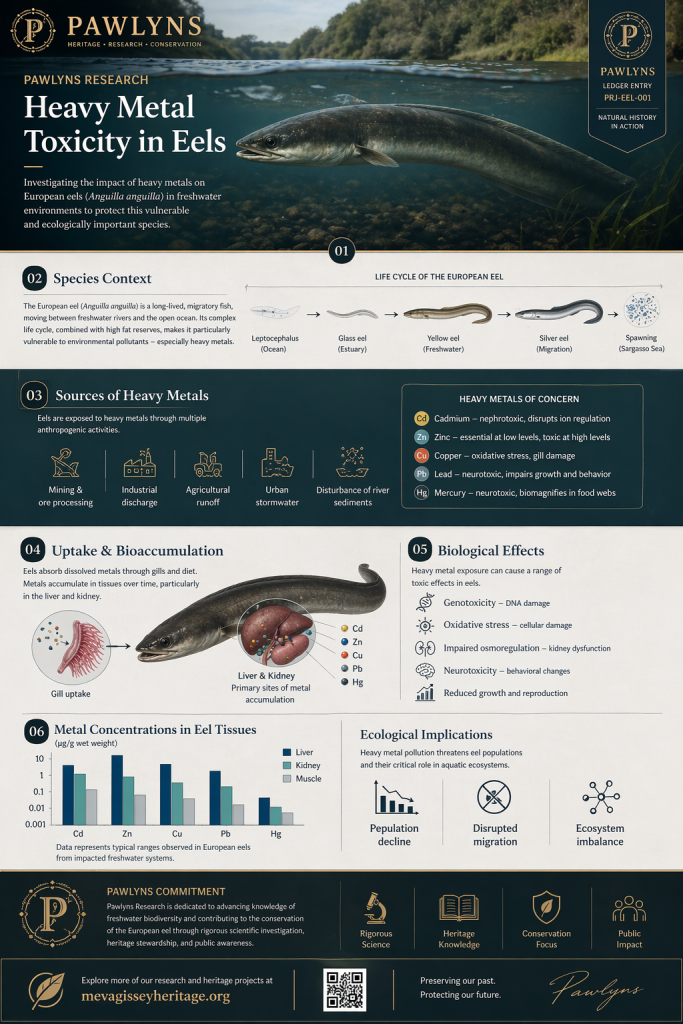
The European eel is a long-lived, migratory fish, moving between freshwater rivers and the open ocean. Its complex life cycle, combined with high fat reserves, make it particularly vulnerable to environmental pollutants – especially heavy metals.
What Are Heavy Metals?
Heavy metals such as cadmium (Cd) and zinc (Zn) occur naturally in the environment but are significantly elevated by human activity, including:
- Historic mining and ore processing activities
- Industrial discharge
- Agricultural runoff
- Disturbance of river and estuary contaminated sediments
Once released, these metals persist in riverbeds and estuaries for decades, entering aquatic food chains.
Cadmium (Cd): High Toxicity at Low Levels
Cadmium is a non-essential metal with extreme biological toxicity, even at very low levels
Key Effects in Eels
Bioaccumulation: Concentrates in liver, kidneys, and gills
Endocrine Disruption: Interferes with reproductive hormone systems
Metabolic Stress: Alters energy use and immune function
Reproductive Impairment: Contaminates eggs and reduces larval survival
Critical Outcome
Even low, chronic exposure can prevent successful migration to the Sargasso Sea and reduce breeding success.
Zinc (Zn): Essential but Harmful in Excess
Zinc is required for normal biological function but becomes toxic at elevated concentrations.
Key Effects in Eels
Gill Damage: Reduces oxygen uptake efficiency
Oxidative Stress: Causes cellular damage
Liver Strain: Impairs detoxification pathways
Comparative Impact
Zinc is generally less lethal than cadmium, but long-term exposure weakens overall health and resilience.
Combined Exposure Effects
In natural environments, eels are exposed to multiple contaminants simultaneously.
Synergistic Toxicity
- Combined metals amplify physiological damage
- Increased vulnerability to disease and parasites, including Anguillicola crassus
- Reduced swimming endurance and migration capability
Bioaccumulation & Life Cycle Risk
Eels are especially at risk due to:
- Long lifespan → prolonged exposure
- High fat content → storage of contaminants
- Single spawning event → failure prevents reproduction entirely
Pollutants accumulated in rivers and estuaries are carried across thousands of miles during ocean migration.
Implications for Ecosystems & Humans
Population Decline: Reduced reproductive success contributes to ongoing eel collapse
Food Web Transfer: Predators (birds, fish, humans) may ingest accumulated metals
Human Health Risk: Eel tissue from polluted areas can exceed safe consumption thresholds
Environmental Context (UK & Cornwall)
Historic mining activity across Cornwall and southwest Britain – has left a legacy of metal-rich sediments in rivers and estuaries. Disturbance of these sediments can reintroduce contaminants into the water column, exposing migrating eels at multiple life stages.
Summary
Cadmium = highly toxic, disrupts reproduction
Zinc = essential but harmful in excess
Combined exposure = amplified biological stress
Result = reduced migration success and population decline