Mevagissey’s history spans over 1,000 years – from an early Christian settlement to one of Cornwall’s most important fishing ports. This timeline traces the village’s transformation through religion, trade, pilchard fishing, smuggling, and modern maritime life.
Introduction
The history of Mevagissey spans more than a millennium, evolving from an early religious settlement into a structured maritime economy.
This timeline brings together evidence from early church history, wills, parish records, and trade documents to show how this transformation occurred.
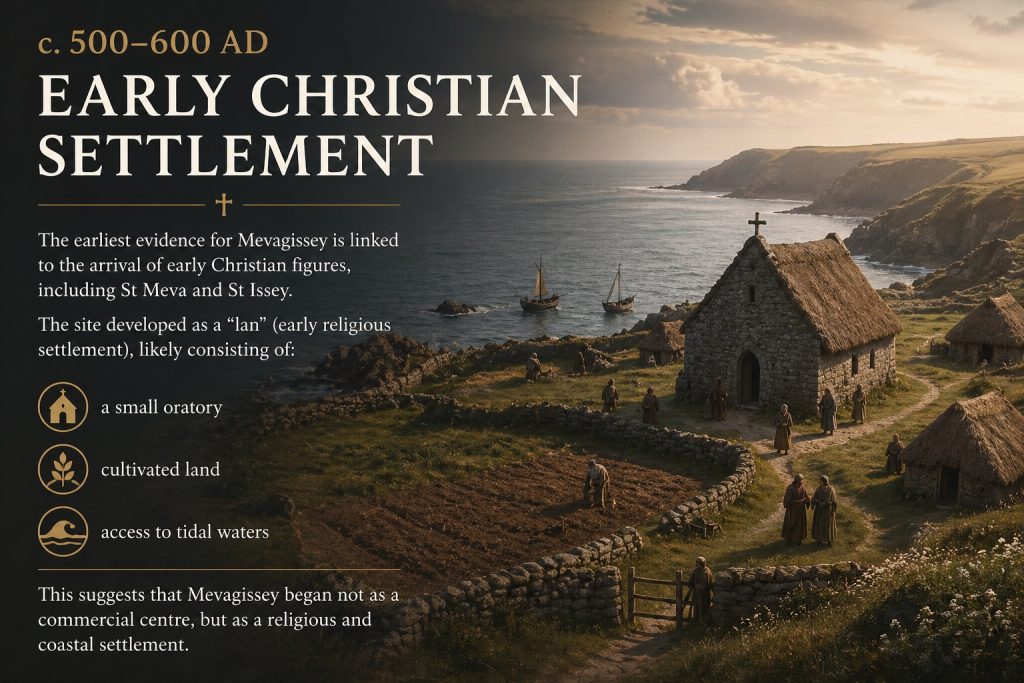
c. 500–600 AD – Early Christian Settlement
A Settlement That Defended Itself
Although much has changed, the earliest form of Mevagissey was not an open village, but something more contained.
The first settlement likely developed as a “Lan” – an early Christian enclosure. These were not simply places of worship, but defined spaces: bounded, organised, and set apart from the surrounding land.
St Peter’s Church stands within this pattern. Its position, the surrounding graveyard, and the enclosing stonework all suggest a place that was once more clearly defined – a focal point for both life and death.
This is where the village began.
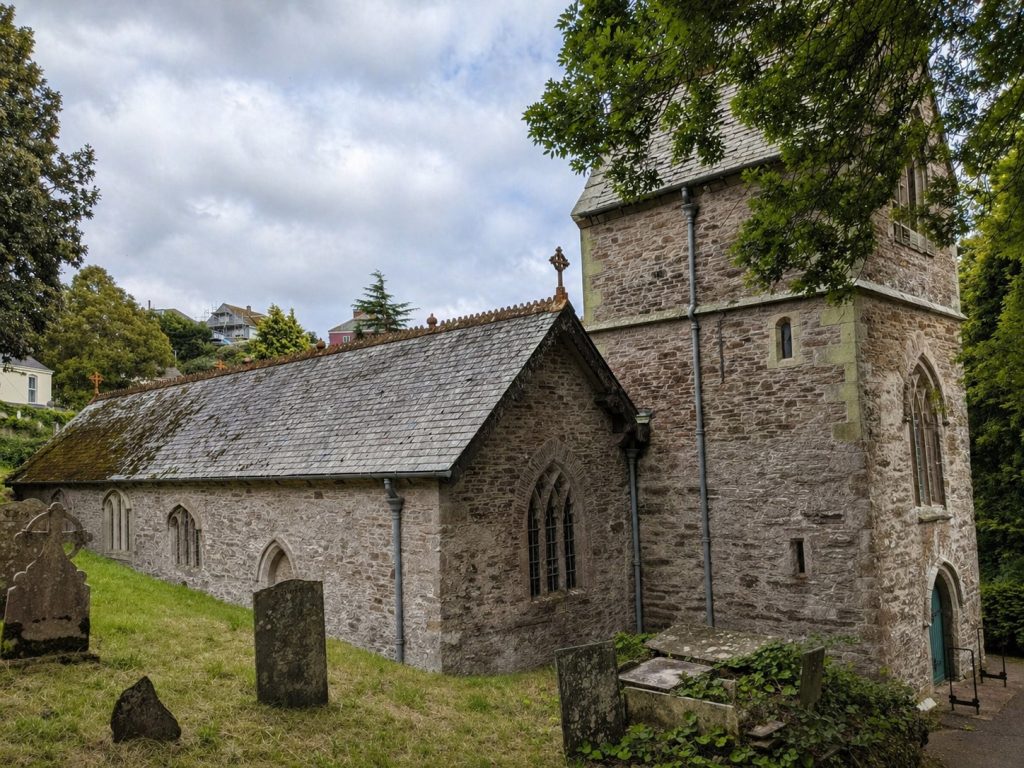
More Than a Church
In early coastal communities, the church was not separate from daily life – it was central to it.
It marked:
- where people gathered
- where they were buried
- and where the boundaries of the settlement were understood
In this sense, the churchyard was not just sacred ground, but part of the structure of the community itself.
A “Toy Fort” Landscape
Later descriptions of Mevagissey refer to parts of the village – particularly around the church – as having a “toy fort” character.
This does not suggest a formal fortification, but something subtler:
- enclosed space
- thick stone boundaries
- a sense of definition and protection
Seen this way, the early settlement was not defensive in a military sense — but it was contained, deliberate, and shaped by necessity.
From Enclosure to Harbour
Over time, the village expanded beyond this original core.
What began as a defined settlement grew outward toward the harbour, shaped increasingly by fishing, trade, and movement.
But the pattern remains.
Even now, the older parts of Mevagissey retain that sense of enclosure — a reminder that the village did not begin as a place of openness, but as one of structure and boundary.
13th Century – Establishment of the Parish Church
By the medieval period, Mevagissey had become an organised parish.
The church was dedicated in 1259 by Bishop Bronescombe
Earlier Norman features indicate an existing religious structure
The site formed part of a wider ecclesiastical network linked to Cornwall
This marks the transition from informal settlement to institutional community.
14th–16th Centuries – Development of Community Structure
During this period:
the church was expanded and rebuilt
the parish structure became more defined
surrounding settlements such as Tregiskey and Trelaven formed part of the wider parish
By the late 1500s, parish registers begin, providing the first continuous written records of the population.
17th Century – First Detailed Economic Evidence
Wills from the 1600s provide the earliest clear evidence of Mevagissey’s working economy.
These records include individuals described as:
- fishermen
- mariners
- coopers
- blacksmiths
Recurring surnames such as Hunkin, Pollard, and Furse appear, indicating established families within the community.
This shows that by this period, Mevagissey was already a functioning maritime settlement.
Early 18th Century – Expansion of the Fishing Industry
By the early 1700s, Mevagissey had become a major centre for pilchard fishing.
Historical accounts record extremely large catches, measured in thousands of hogsheads, implying:
organised labour
curing and storage systems
export trade
Fishing had moved from subsistence to large-scale commercial activity.
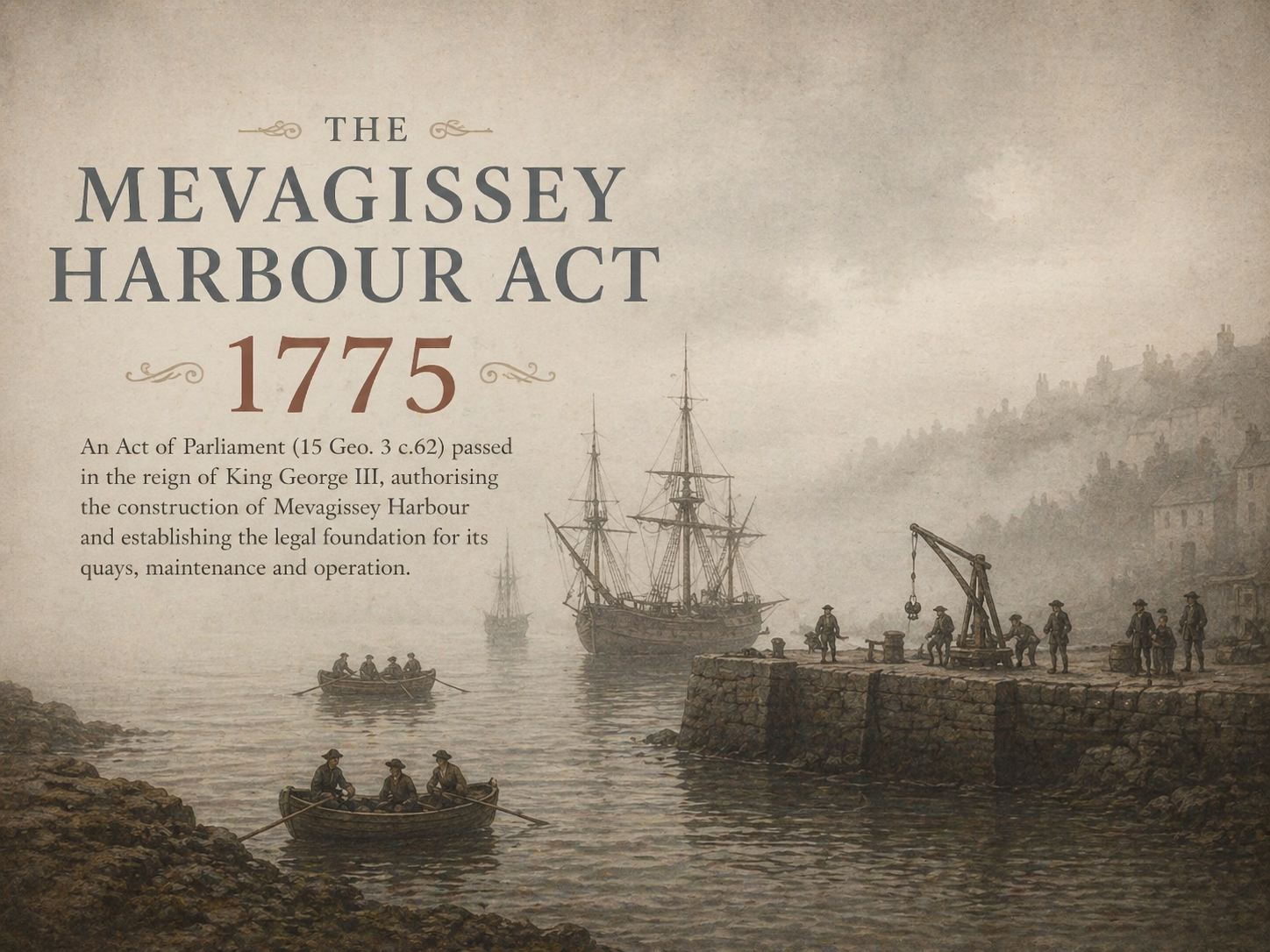
As the scale of fishing and trade increased during the early 18th century, the need for a more formalised harbour structure became increasingly clear. What had developed organically through local effort now required legal definition and authority. This transition was fomalised in 1775 through the Mevagissey Harbour Act, an Act of Parliament that authorised the construction of the harbour’s original quays and established the framework for its long-term operation.
Late 18th Century – Trade and Smuggling Networks
During the late 1700s, coastal trade and smuggling operated together.
Evidence from Cornwall shows networks involving:
- merchants
- captains
- financiers
Figures such as Samuel Furse illustrate the integration of maritime activity across formal and informal systems.
Early 19th Century – Infrastructure and Community Expansion
The early 1800s saw the development of:
fish cellars and processing sites
land use linked to families such as Harris
expansion of merchant activity beyond Mevagissey
At the same time, religious life expanded:
Bible Christian chapel established (1818 land lease)
strong nonconformist presence
Figures such as Philip Ball connect:
- trade
- land
- finance
- religion
Mid–Late 19th Century – Fully Developed Maritime Economy
Probate records from the 1800s provide clear evidence of a structured system:
James Pawlyn (merchant)
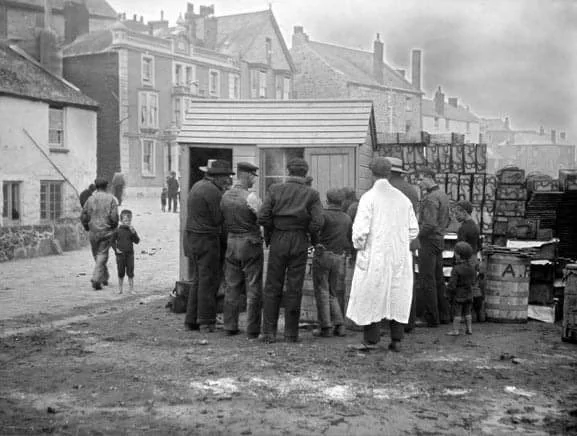
William Richards Pearce (fisherman)
Benjamin Harris Roberts (builder and merchant)
Mary Ann Hunkin (family continuity)
Baptism records show recurring surnames across generations, including:
Hunkin
Pearce
Keast
Harris
This confirms a layered and interdependent economy.
Late 19th-Early 20th Century – Regional Trade Networks
Merchant firms such as Pawlyn Bros operated across multiple ports.
Records confirm:
fish merchants and curers
operations beyond Mevagissey
integration into wider Cornish trade
This reflects the continuation of the harbour as part of a regional system.
20th Century – Decline of Traditional Systems
Changes in fishing and trade led to:
reduced scale of pilchard industry
decline of curing and cellar systems
reduced role of merchants
The traditional maritime structure began to fragment.
Present Day – A Historic Harbour with Deep Roots
Modern Mevagissey reflects centuries of development.
Evidence from:
- early religious settlement
- parish records
- wills and probate
- trade history
shows that the village evolved from a small coastal settlement into a complex maritime system.
Conclusion – A Continuous System
From early Christian settlement to structured trade networks, Mevagissey’s history is one of continuity and adaptation.
Across more than a thousand years, the same patterns emerge:
- connection to the sea
- stable family presence
- evolving economic roles
Together, these form a continuous and interconnected system that defines the history of Mevagissey.