A collection of historic photos of Mevagissey harbour. Showing the working life at the heart of one of Cornwall’s most important fishing communites. These historic photographs capture the people, boats, and daily life that shaped the village over generations. From traditional sailing vessels to working families on the quayside, these images offer a rare glimpse into Mevagissey’s fishing heritage.
Life in a Working Fishing Harbour
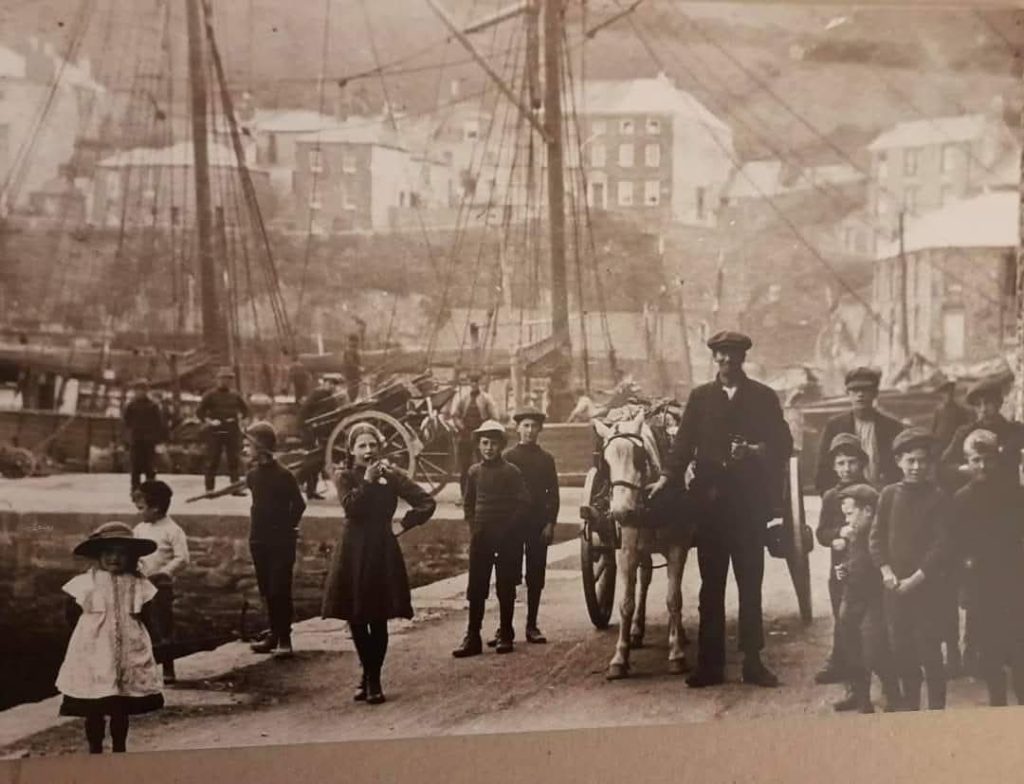
In the late 19th and early 20th centuries, Mevagissey was a busy and hardworking fishing port. The harbour was filled with boats, equipment, and constant activity as fishermen prepared for sea or returned with their catch.
Families lived closely connected to the harbour, with children growing up around the fishing trade. Horses and carts were often used to transport fish and supplies, and the entire village played a role in supporting the fishing industry.
The Snowflake of Runcorn
The Snowflake of Runcorn, a traditional sailing vessel photographed in Mevagissey harbour in the early 1900s. Its large wooden hull and rigging reflect the scale of boats used in Cornwall’s coastal trade and fishing industry.
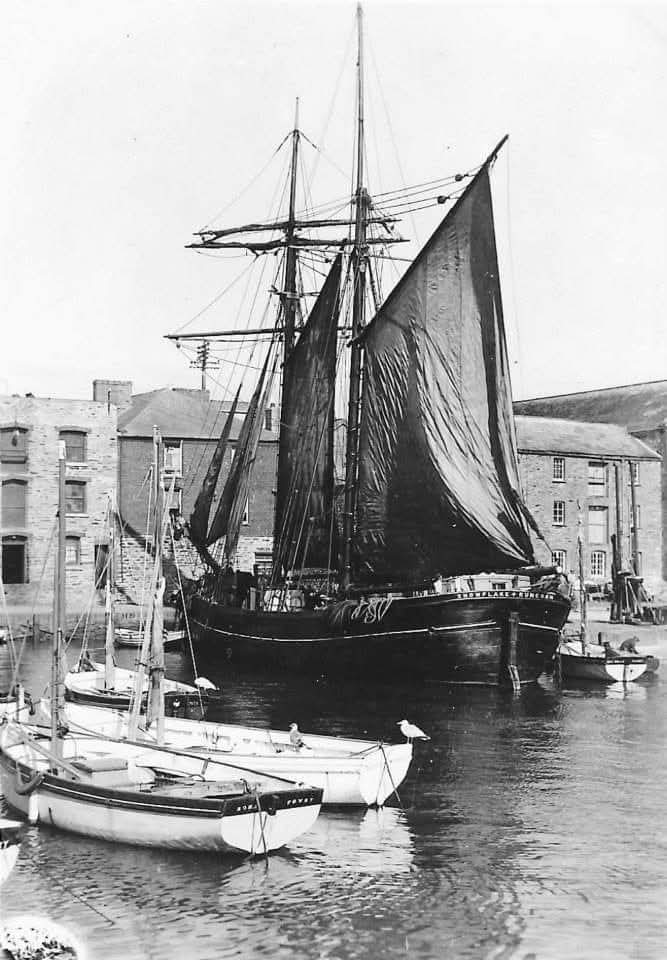
Vessels like this connected small fishing ports with larger industrial harbours around Britain, forming part of a wider maritime network.
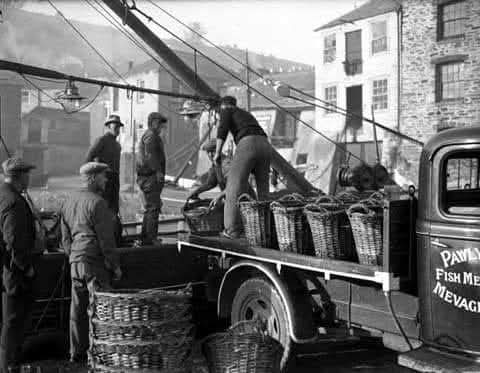
Pawlyn Bros Fish Merchants
Pawlyn Bros fish merchants at work in Mevagissey harbour. The image shows fisherman unloading baskets of freshly caught fish onto a waiting lorry, ready for transport to markets beyond Cornwall.
Businesses like Pawlyn Bros played a vital role in the local fishing industry, acting as the link between the harbour and inland buyers. The wicker baskets, traditional clothing, and manual handling of the catch reflect a time before modern refrigeration and large-scale distribution.
Scenes like this were once common in Mevagissey, where the harbour bustled with activity as fish were landed, sorted, and quickly sent on to market. It offers a clear glimpse into the working life of the village and the importance of family-run fish merchants within the coastal economy.
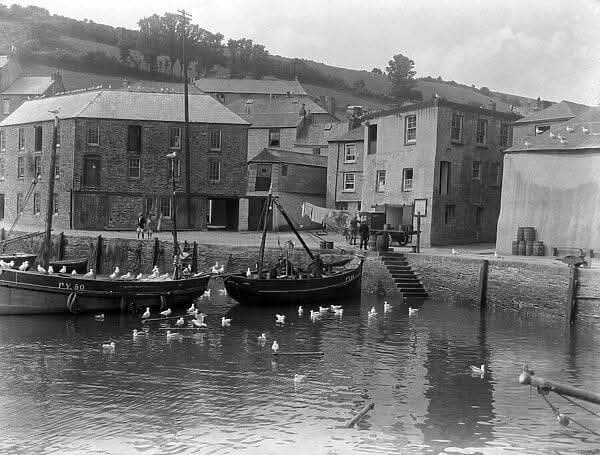
Mevagissey Harbour and Quayside Life
A quiet scene in Mevagissey harbour showing traditional fishing boats moored alongside the quayside, likely during the early to mid 20th century. Seagulls gather on the water while small working vessels sit low in the harbour, reflecting a typical moment between landings.
The surrounding buildings, with their simple stone and plaster construction, form part of the working harbour environment where fish would have been landed, sorted, and prepared for market. Steps leading down to the water allowed easy access for fishermen and merchants moving between boats and shore.
Images like this capture the everyday rhythm of Mevagissey, where the harbour was not just a place of work, but the centre of village life. From fishing and trade to local gatherings along the quay, it provides a glimpse into a slower, more traditional coastal community.
Woman and child overlooking Mevagissey harbour Cornwall, early 20th century.
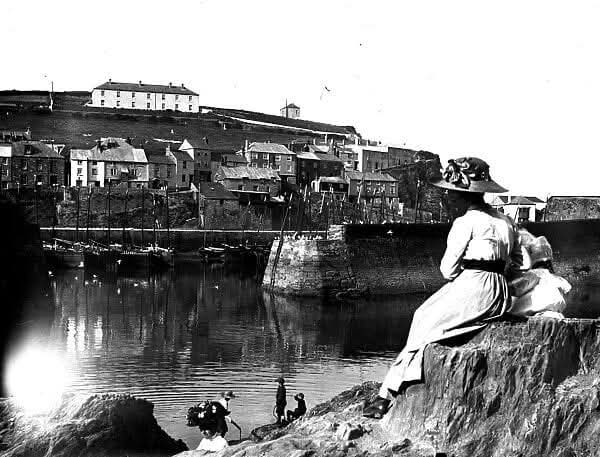
A peaceful view across Mevagissey harbour in the early 1900s, showing a wman and child seated on the rocks overlooking the village. The scene captures a quieter side of harbour life, where daily routines and family moments unfolded alongside the working fishing port.
The house rising up the hillside and the boats resting in the harbour reflect the close connection between the village, the sea, and its people. Images like this highlight not just the industry of Mevagissey, but the community that grew around it.
Mevagissey lifeboat on its launching carriage, Cornwall, circa 1890
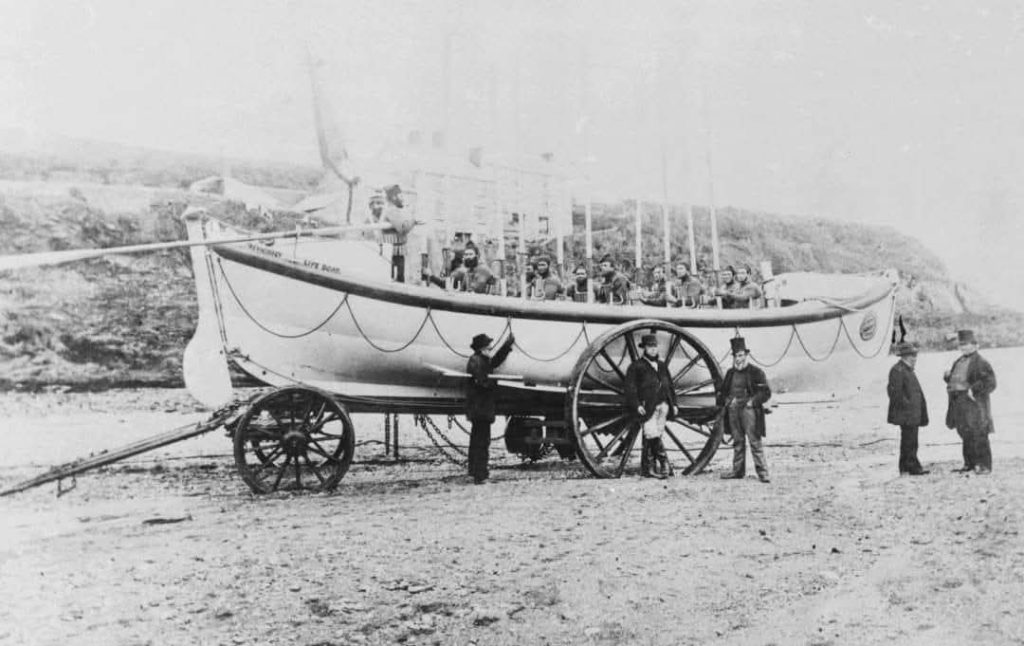
The Mevagissey lifeboat pictured here around 1890, mounted on its launching carriage and ready to be taken to the water. Before the construction of modern slipways, lifeboats were often transported across the beach or harbour using large wheeled carriages.
Crew members and local men can be seen gathered alongside the vessel, reflecting the community effort required to launch and operate lifeboats during this period. These boats played a vital role in coastal safety, responding to shipwrecks and emergencies along Cornwall’s rugged coastline.
Images like this highlight both the bravery of the lifeboat crews and the practical challenges of maritime rescue in the late 19th century.
Mevagissey Feast Week celebrations, with the village street decorated in flags and bunting.
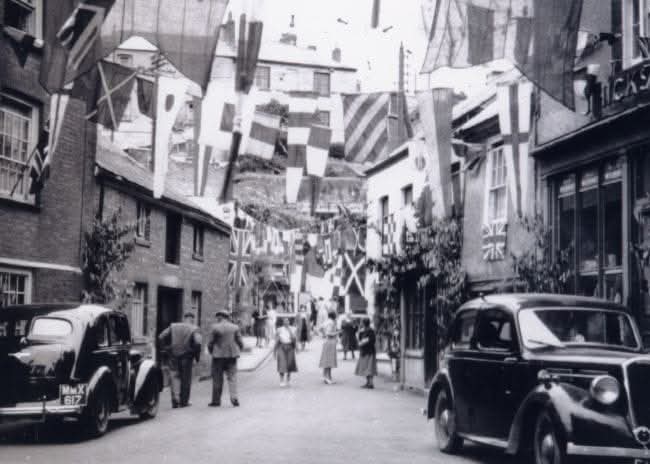
A lively street scene during Mevagissey Feast Week, showing the village decorated with flags and bunting for one of its most important annual celebrations. Cars line the narrow street while residents gather beneath the decorations, capturing the strong community spirit of the time.
Feast Week has long been a highlight of life in Mevagissey, bringing together fishing families and visitors for days of festivities. Scenes like this reflect the traditions, pride and social life of the village beyond the harbour, offering a glimpse into how the community celebrated together.
Villagers gathered outside a shop in Mevagissey, capturing everyday life in the mid 20th century.
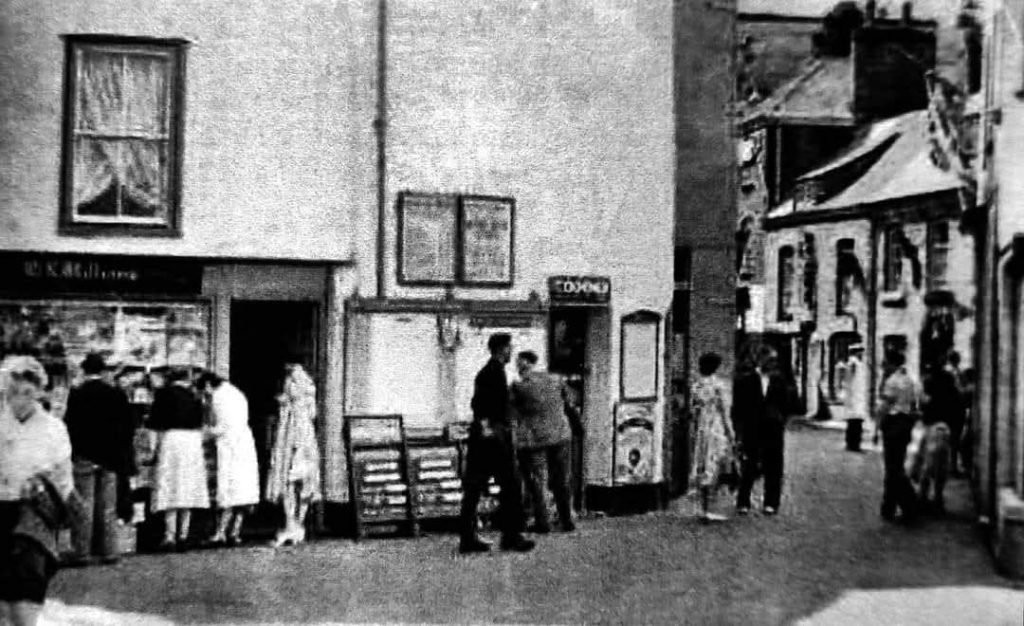
A snapshot of everyday life in Mevagissey, showing locals gathering outside ‘Willie Clokes’ Grocers shop. Shops like this were central to daily life, serving not just as places to buy goods but as important meeting points for the community.
Photographs like this reflect the close-knit nature of the village, where daily routines, conversations, and local news were shared face to face. It offers a glimpse into the slower pace of life in Mevagissey during the mid 20th century.
The topsail schooner Snowflake of Runcorn moored in Mevagissey harbour, with fishing baskets along the quay, early 20th century.
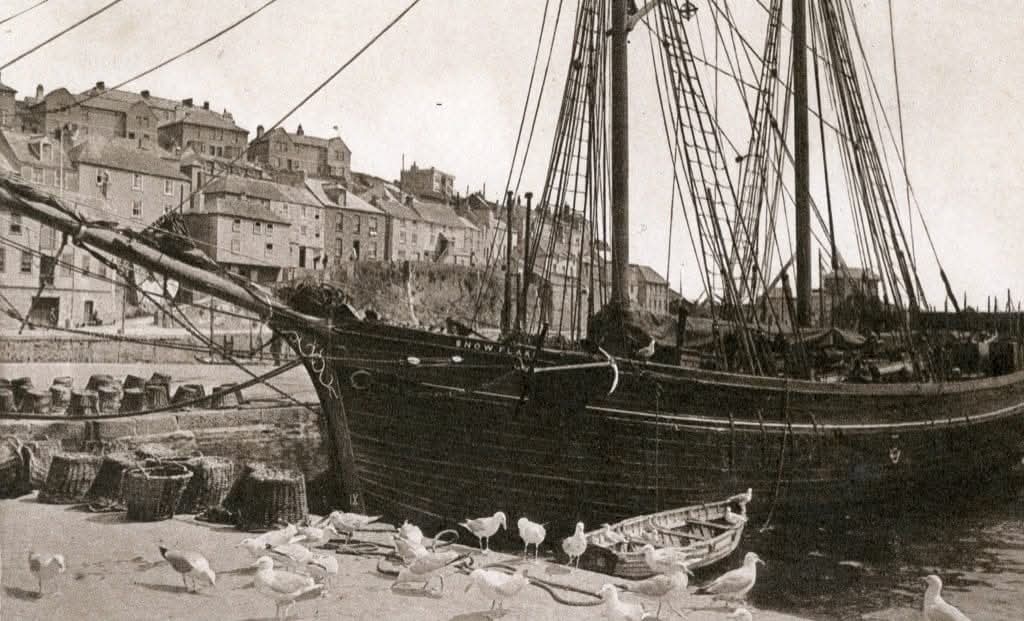
Another view of the topsail schooner Snowflake of Runcorn lying alongside the quay in Mevagissey harbour. The vessel’s tall masts and rigging dominate the scene, illustrating the scale and complexity of these traditional sailing craft.
Fishing baskets line the harbour edge while gulls gather along the quay, capturing the busy, working character of Mevagissey at the time. Schooners like the Snowflake were a familiar sight in Cornish harbours, playing an important role in both fishing and coastal trade during the early 20th century.